Friday, February 27, 2015

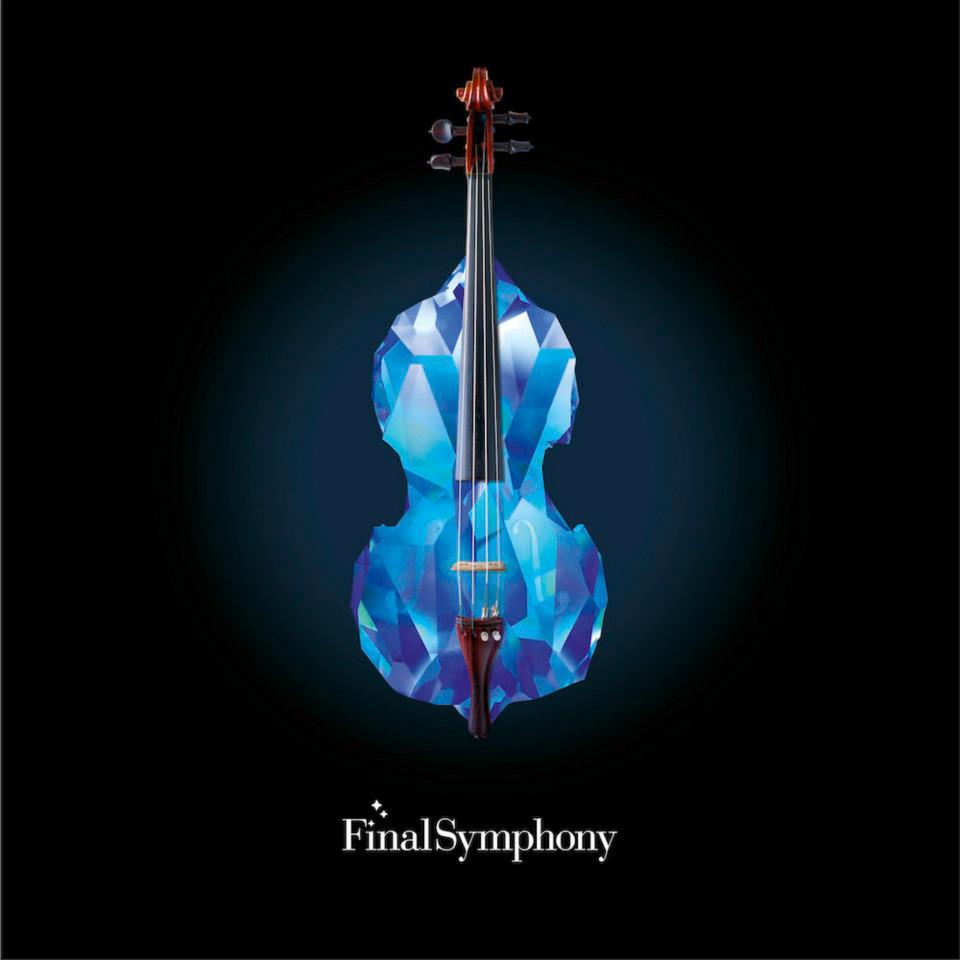
The Review of Final Symphony

The day will come when I do not spend the entirety of it listening Final Symphony, but that is not this day. The day will also come when the music does not bring me to tears, but that is not this day either. I made the “mistake” of listening to samples of all the songs on iTunes, and it could not be endured…my lack of this music. It had to be bought; it had to be experienced, and subsequently I had to speak.


Final Symphony consists of arranged music from Final Fantasies VI, VII, and X: an opening overture, one from VI, three from VII, three from X, then three encores from VII, X, and a medley from the series. It is performed by the London Symphony Orchestra, and every single song is good. Now there are some that are better than others and some I do not particularly care for, but it a credit to the composer Nobuo Uematsu and the arranger that even the songs that hit my ear less stellar are still worlds ahead of most of the music I hear. You do not need to be a fan of Final Fantasy, nor do you need to be a connoisseur of video game music in general to enjoy this bliss. In fact one of the reviews on iTunes stated the very same. This album is for people who love good music and enjoy the classical arts. Thus far every single review there has given it five stars.

The opening overture, Circle Within a Circle Within a Circle (the title puts me in the mind of Smashing Pumpkin’s “The Beginning Is the End Is the Beginning") is light, flighty and a very sweet piece. It’s machinations are a bit too frenetic for my tastes, but they do put me in the mind of a series whose main goal is to portray the hope that always resides despite ever creeping darkness. This is one of the shortest pieces at little over four minutes, which is not long to wait before the album spills you into the game that first caught my heart.

Final Fantasy VI (Symphonic Poem: Born with the Gift of Magic)


The title does not lie; this is truly poetry made song. FFVI lovers will rejoice in this masterpiece that binds together the Empire’s music, Terra’s Theme, Kefka’s Theme, and the Mystic Forest book-ended with the Opera that teases so cruelly at the end. The Empire’s music is haunting and dark flowing together with Terra’s more forlorn around 1:30. Kefka’s music, which comes in around 3:30 is playful and childish with that note of the sinister hiding beneath to show the depravity that can lie amongst japes and mirth. There’s an almost classical/ballet sound that enters in its later part with a section that is reminiscent of FFIX’s Vamo All Flamenco in its snapping finger cymbals. I can envision a complex dance flawlessly performed by two people in flowing and colorful clothes while the world burns around them to their utter lack of care. The harmonies to this part are weaving and almost sensuous without missing a beat.

Around 7:50 we enter the Mystic Forest and the main wind instrument almost sounds like a recorder, but it is beautifully accurate for this part of the piece. The strings shiver as if amongst mist filled trees and we the observers have no idea where this haunted path will lead. Near 9:30 the melody starts to mix with Terra’s theme and then spirals into Kefka’s again before dropping us into the disaster/cataclysm music the permeates this apocalyptic tale. Then we are brutalized by the battle theme, which is equal parts harsh and gorgeous. It moves into the Decisive Battle theme afterwards before catching the thread of Kefka’s song that is throughout.

At 13:30 there is an all stop. The music ceases for long moments so we must hold our breaths before a plunge into sorrow for what follows is a lay of despair that I can’t myself place in the game (but you are of course welcome to, if you know!), and this is a precursor to Terra’s Theme. We are left wanting more for the beginning of the Opera closes this out near 17:00. Let us pray that in Final Symphony II we are treated to a full blown and absolutely exquisite rendering of that historic melody.

Final Fantasy X (Piano Concerto): I. Zanarkand


I have little to say about this than you may weep. To Zanarkand has always strummed my heart like a gothic lullaby for it dredges up the image of fruitless search and hopeless pursuit. This melody does no less.

Sadly I was less impressed with the other two songs from FFX, Inori and Kessen. Inori was one of the Songs of the Fayth but it lacked the subtleties that I so enjoyed in other versions. I believe Kessen is supposed to be the battle music, but it is too harsh and grating to my ears. Again, I must impress upon you that even though I did not enjoy these as much as the others, ,they are still excellent melodies. My critique of them is like saying, “That one particular light shaft in Heaven is the barest bit dimmer than all the rest."

Encore: Final Fantasy X (Suteki da ne)


The encore for this game more than makes up for what I missed in the other two songs. Rendered in piano, it brings together the yearning and pain of love unfulfilled not because of lack, but because of insurmountable circumstances. Is any story sadder? Life <strong>is </strong>but a dream…

Final Fantasy VII (Symphony in Three Movements): I. Nibelheim Incident


If FFVI caught my heart, then FFVII stole it and captured my soul as well. This song is all dark tones and minor key, and if I wasn’t already in love with it, I would all more so be. The crescendos will terrify you because you don’t know when they’re going to fall or where they’re going to hit. The music around 2:30 makes me envision in near darkness save for sickly green light a body tumbling in a winding sheet. An ever moving and omnipresent cycle going round and round. It’s unending; it’s inevitable; it’s the paradigm presented in O Fortuna, the wheel of fortune, the wheel of fate. Near 4:00 the beginning of One Winged Angel starts, and I cannot believe I’m uttering this, but it sounds even more disjointed, more distorted like a rent and broken puppet that still must painfully dance. The music in VII has always impressed me with its phenomenal use of the minor key with the addition of cacophony and discord. Minor sevenths are among the ugliest of chords, made to clash with all that is harmonious and never meant for beauty, and yet…here in this narrative of ancient horrors they ring so perfectly. There is not a hint of playfulness here as there was in VI. It is all dark; it is all shadows; there is no reprieve. It’s the coming of the dark mother whose lies you must accept. Near 4:45 is where we find “her,” Jenova’s Theme, and if you listen closely, you’ll realize that this melody is the Prelude backwards and in the minor key (it only took me 17 years to achieve that observation).


Cloud’s Theme is interwoven on top of Jenova’s around 7:30, which is an excellent metaphor for how he overcomes the corruption that was forced upon him. Then at 9:30 the medley goes One Winged Angel. There’s this ever present dark beat there that never subsides. The drums in the song always reminded me of those great, many-tiered ships that needed them to keep the rowers in time and in line. The first part ends here where it should…with the coming of this horror, and the question of what will be allowed to endure.

Final Fantasy VII (Symphony in Three Movements): II. Words Drowned by Fireworks

As the first part is dark and full of terrors, the second is light and joyous and free…in its initial seeming. The long sweeping string strokes see to that as the low oppressive beats marked the first. This is my favorite song with Part I of the VII cycle being a very close second. Cloud’s theme pervades this melody tying the songs of Aeris/Aerith and Tifa together between. Around 4:30 Aeris’s takes the hand of Cloud’s, and a lone viola plays this lament before the entire string section joins in. Then near 6:30 Tifa’s theme brings me to tears. Was there ever a song more forlorn? This section of VII’s symphony ends with a distorted version of Aeris’s song because it is tied to Sephiroth’s…his overshadows hers starting around 10:40. It is very subtle and initially sounds like a little major to minor switching, but then near 11:00 the unmistakable opening to One Winged Angel tears through before seeming to fade, and we think that’s it; we think we’re safe. This is the end of the song. It finishes in darkness, but this is no different from the prior, but no, it fades and then rises again with Cloud’s theme in minor while Aeris’s theme shivers disjointed from behind. And of course the drums, the omnipresent drums that pervade Sephiroth’s leitmotif to beat in warning of what is yet to come. Just listening to it is terrifying, and the last notes that fade are the cacophonous tones of the beginning of OWA as if reminding us the cycle will come again and again and again. Even near the end it refuses to fade until the last moment and my hair stands on end.

Aeris’s, Tifa’s, and Cloud’s songs wind and skirl together in the most beautiful amalgamation I’ve ever heard. Strains of each flow through each other in a sumptuous, glorious swell. It is sweeping and grand and even Seph’s song fits in to make a dark binding in the end with Aeris’s. It is the unity of opposites made to sing.

Final Fantasy VII (Symphony in Three Movements): The Planet’s Crisis

Cloud’s theme and Sephiroth’s song run throughout all three of these pieces to show the struggle against corruption vs. the bending to its will. This medley is literally the end game when all hopes and prayers rest on one dead maid It is based on World Crisis from the OST. We get to hear some of the Cosmo Canyon theme at the start, but even still the concise beats of One Winged Angel creep in. Then around 3:15 is a gorgeous rendition of Cid’s song. The music then tumbles into turmoil. Will we live or will we die? Shall we have a second chance? Around 10:00 we receive our answer and (supposed) salvation. Every single note of this section paints the picture of unending light falling from the sky, but will it save or smite us? The original game left this question in the minds of the players. We of course have our answer now; however, the more existential, “Did we deserve it?” remains to the ages.

Encore: Final Fantasy VII (Continue?)

There is a music box type sound in this medley starting near 3:00 as if everything that’s happened is a child’s woeful dream. There…is a theory about that with respect to Aeris as she is the first and last person you see in the game making the story a <a href="http://tvtropes.org/pmwiki/pmwiki.php/BookEnds/VideoGames">book end</a> and providing some speculate about what really did happen. Near the end of this glorious extra there is that one strain of music associated with Sephiroth. It is first heard during the Nibelheim Incident in the basement of the Shinra Mansion where Sephiroth waits…initially the melody is hardly even that being only bells and drums, but then the organ comes in what I have heard described as the “music of evil.”


It is as dark and minor as you will ever get, but in Final Symphony at the end it is made pure. In my article Major/Minor Switching I discuss how changing from minor to major usually ends in a cacophonous disaster with my example being One Winged Angel switched from its original E minor to G major. It was just…wrong, but Final Symphony has done what that video could not in taking the brief phrase in Those Chosen and making the switch to minor work. It does not make the song joyous; however, terror changes to forlorn with the barest hint of hope. This is the essence of Final Fantasy VII.

The final encore is a conglomeration of battle themes going between VI and VII, but this is not just the base battle music. It also includes the Fierce Battle theme from VI and of course One Winged Angels falls into place from VII. It ends on a questioning note again with the beginnings of that song.

If I had to give one less than glorious mark to this masterpiece of an album it would be to lament that there were not more songs from FFVI. I adore the Symphonic Poem and wish it had been done in three parts like X and VII were graced with. I have been dying to hear a good orchestration of Cyan’s Theme, and if they did one of VI’s entire ending I’m sure my heart would break. This album has made me add another item to my FFVII remake demands, which were as follows:

  •     PS4 graphics so the entire game looks like Advent Children
  •     Japanese with English subtitles option
  •     No change in the story    
  •     No change in the game mechanics

The additional demand would be that the London Symphony Orchestra perform all of the music and that it be arranged by Germans as was done for this symphony. Arranged by the Germans; performed by the English. No wonder this is more than perfect.

I could not recommend this album more highly. If you do nothing else this week, at least give it a listen. All of the music is available on YouTube so if you are unable to purchase you can still partake. Even if you have never played a Final Fantasy nor listened to another game soundtrack, listen to this. It is not just for gamers; it is for anyone with a discerning ear who desires the chills that only powerful music can bring. For myself I shall continue listening as I have throughout this review and keep my tissues near so I can wipe away the tears that shall surely fly.

Saturday, February 22, 2014

Movie Review: Frozen


I was extremely hesitant to see this movie.  So much so that I did do so until this Monday (2/17/14) when it was released on 11/27/13 (yes, it's still in theaters, which is very surprising since it comes out on 3/18/14),  My reasons for hesitancy have to do with reading some less than stellar speculations about how Disney was now out to ruin Hans Christian Anderson's fairytale The Snow Queen, which it's loosely based on.  After seeing the movie, I'd say it's more inspired by or to put it another way kind of a fanfiction of The Snow Queen (but then I could make the argument that everything is a fanfiction of something, which is a whole other blog post).  When I first discovered that Disney reworked and watered down classic fairytales I was extremely annoyed in the way only a teenager can be.  I much preferred the darker and bloodier versions, but now as an adult, while I still do lean towards the morbid, I can see the value in what they've done.  Disney does tend to imply in a way that they were the originator of the tales whether it's done directly and purposely or not, but this seems like it was more for their past projects.  Most of us immediately think of them when we hear such titles as Snow White, Sleeping Beauty, or Cinderella, and it's hard for me to presume that they would not want it any other way.

Regardless, I decided to venture out and see Frozen after hearing 99% wonderful things about it from friends and family alike.  I actually went to see it with my brother who was on his second time.  Let me start out with the soundtrack, because this is important.  Prior to even the opening credits, I had chills running down my spine from the haunting beauty of the boy's choir that precedes it..  This was an excellent meta move from a film entitled Frozen.  Like so many things I've been hesitant about (A Song of Ice and Fire, the book series mind you; Harry Potter; The Hunger Games; FFVII), I was completely wrong to wait.

Frozen is about two sisters Anna and Elsa who happen to be princesses, and I mean to say it in that way.  Their being princesses, while integral to some story parts, really is not all that important. They reside in the kingdom of Arendelle with their parents, the king and queen.  Anna is a feisty ginger ingenue, while Elsa, silvery-blond, is more mature and reserved, and this is not just because she is the elder.  Elsa has the power to literally create winter, and when the two sisters are girls, this is just a game.  They romp and cavort through the ice and snow while inside their castle until Elsa accidentally strikes Anna in the head with a wintry spell, stunning her and making a strand of her hair turn ice white.  Their parents seek help from trolls who not only heal Anna but also remove all memories of her sister's magic.  After this Elsa stays mostly locked in her room trying desperately to learn how to control her abilities, while Anna wonders why they've became so distant as the two girls grow up.  During this time, their parents are lost at sea.  Anna and Elsa are left alone in their solitary castle, where they doors have not been opened for years, and they don't even have each other for company.

When Elsa comes of age, the kingdom prepares for her coronation, and Anna, excited to finally see people, wanders the town and meets Prince Hans of the Southern Isles.  The two feel a mutual connection in that they're both sort of goofy and clumsy, even "finishing each others 'sandwiches'" as their duet suggests.  They decided then and their that they're going to get married, and Anna asks for Elsa's blessing.  In a total paradigm twister for a Disney film Elsa tells her that she can't marry someone she's only known for a day, which makes complete sense.  During the ensuing argument, Elsa loses control of her powers and bestows eternal winter upon Arendelle, before fleeing to the northern mountains.  There she comes to the realization that only in solitude can she be her true self without fear or judgment, so she casts off all shackles to literally let her hair down (it's been bound up as tight as she was prior to this, easy but still excellent symbolism) and create a glorious ice palace for herself while singing "the cold never bothered me anyway."  Her clothes change as well to a flowing, diaphanous blue gown, starkly different from her queenly and conservative garb.

Meanwhile, back in Arendelle, Anna is determined to get her sister back and heads to the northern mountains alone leaving Hans behind to take care of her kingdom.  While getting supplies Anna meets Kristoff, a mountain man with his reindeer Sven, who reluctantly agrees to help her since his ice collecting business has been ruined by the winter that never ends.  During their journey north Anna imparts how she got into this situation, and Kristoff gives her a look when she reaches the part where she and Hans were going to get married after knowing each other for one day.  I really liked that the movie had not one, but two characters who had never met nor spoken to each other, call Anna out on how bad of a move that marriage would've been.  It's as though Disney is really trying to make up for all the times that they had this very situation happen, and they're saying, "No no no, we realize now that's not the way to go.  Give us a break, we were just working within the confines of the times of our work!"

While journeying up the mountain Anna and Kristoff meet a living snowman named Olaf much to Anna's greater shock since that was the name she and Elsa always gave their snow creations.  Olaf leads them to Elsa's ice palace where the sisters are reunited, but the snow queen is still terrified of hurting Anna and refuses to return to Arendelle, insisting that her place is here alone in the cold.  Anna persists in her persuasion, which agitates Elsa's emotions to the point where she accidentally uses her powers against her sister again striking her this time in the heart.  Horrified by her actions, Elsa creates a giant snow monster to chase them away so that she won't hurt her her sister nor anyone again.  While they flee Kristoff notices that Anna's hair is turning white and realizes something is very wrong.  He decides to take her to his adopted family, the very trolls that healed the princess the first time.  They tell them that Anna's heart has been frozen, and unless it is healed by an act of true love, then she will become frozen solid forever.

Back in Arendelle, Hans decides to lead a search for Anna.  He enlists the help of the Duke of Weselton, a guest at the coronation who insisted afterwards that Elsa was a sorceress who needed to be taken care of.  He grants Prince Hans the use of some of his men, but makes sure his lackeys understand what they need to do should they encounter the ice queen.  When Hans and his men reach Elsa's palace, the ensuing battle knocks the queen unconscious so that she can be brought back and imprisoned in Arendelle.  Hans pleads with her to undo the winter she so wrought, but Elsa insists that she doesn't know how.

***Warning - Major Story Spoilers Ahead***

When Anna reunites with Hans and begs him to kiss her to undo the frozen curse, he refuses in order to reveal his amazingly unexpected (at least to me) Face-Heel Turn where he reveals he never loved her or had any interest in her.  He merely wanted to marry her to gain control of her kingdom since he has twelve older brothers and nothing else left for him at home.  At no point in any of Hans' scenes did I even get an inkling that he was going to be the main villain, and I was actually scratching my head prior wondering how they were going to reconcile Anna's two love interests in Kristoff the rough, but loyal, mountain man with Hans the slightly silly, but still responsible, prince.  I liked them both!  Hans is good-looking and handled things in Arendelle very well while both Anna and Elsa were indisposed, even doing things like handing out blankets and warm clothing to the people and making sure they had enough supplies.  The only hint that's given is in the beginning of the movie where he tells Anna about his twelve brothers and how they treated him growing up, but nowhere in his attitude is the nefarious schemer Anna sees now.  She is completely destroyed by this news as he leaves her to die from her own sister's touch.  Hans then lies to the people of Arendelle saying that Anna is dead, but they were able to say their wedding vows prior to her demise, essentially making him the king.  He then charges Elsa with her sister's death, but the snow queen manages to escape prior to execution.

Olaf the snowman manages to find Anna and builds a fire at the risk to himself.  She admonishes him for this, and he then delivers one of the most poignant and heartbreaking lines in the film saying, "Some people are worth melting for."  He tells her that Kristoff is in love with her and helps her to the frozen fjord to find him.  Hans confronts Elsa and tells her her sister is dead because of her.  Her ensuing despair at this causes the storm to cease, which gives Kristoff and Anna the chance to reach each other.  However, when Anna sees Hans is about to kill Elsa, she throws herself in between her sister and the sword, freezing solid in that moment so the blade shatters off of her ever winter skin.

Elsa grieves for her sister, but in the midst of her tears, Anna begins to thaw for her sacrifice was an act of true love.  Elsa then realizes that love is the key to controlling her powers and is able to thaw Arendelle and even make it so that Olaf can survive in the summer.  Hans is sent back to his kingdom in disgrace, Kristoff and Anna share and kiss, and the two sisters reconcile with Elsa promising never to shut the castle gates again.

Maybe its the fact that I've romanticized winter or maybe it's the fact that I love a good twisted paradigm, but I found Frozen to be phenomenal.  The enchantress is not evil and the handsome prince is not good (though he had many of us fooled for a while).  I loved the contrast between the two sisters.  Anna, fiery and positive to Elsa, cool and reserved.  The story was first and foremost about the relationship between the two of them.  The romantic aspect was there, but it took a back seat to what really mattered.  It reminded me of Brave in that that film was all about the mother-daughter bond, but I felt Frozen was a superior film due to the extraordinary lengths Anna goes to in order to find her sister and bring her home (not saying that Merida didn't, but I just felt that in Frozen it was more profound).  There is also the idea of the sacrifice.  The "act of true love" wasn't the typical Disney kiss, but rather the true love between siblings.  Even though Elsa was the one who caused her to be in her position, even though Anna believed at the time she was losing her last chance to live, she didn't care and threw herself in front of the blade anyway.  Maybe it's the bravery and self-sacrifice that draws me to this tale.  The willingness to risk everything for the sister you love despite the fact that they'd essentially become estranged while living under the same roof.  Even after all those years Anna didn't care.  She wanted to know why they'd become so distant and nothing was going to stop her from finding out.

This is a movie I would love for all young girls especially to see.  It's continuing a path I'm happy that Disney is starting to take in that there are greater loves than just romantic.  There are better things than a prince's kiss.  Is this the first Disney movie to show the princess ending up with a commoner?  No, of course not.  Aladdin did that back in 1992, and in Brave the princess didn't end up with anyone at all!  It is the first Disney movie I can recall where the enchantress isn't evil, and I love that.  I love that that paradigm has been flipped.  Even though her powers can be very destructive, her intentions are not, and intentions most certainly matter.  Everything Elsa does is out of responsibility.  She locks herself away in order to protect Anna.  She flees to the northern mountains for the same not realizing that she's frozen the entire kingdom.  When this is proven to her, she's absolutely horrified that her people have suffered because of her actions.

Both of the sisters are exemplary characters, Olaf the sidekick is not only a good comic relief, he also provides good insights and the one very poignant line I mentioned above.  The real love interest is someone that Anna actually gets to know (she even meets his family, shock!) before making a commitment, and the villain of the story isn't revealed until nearly the end.  There's much to be said for good timing on a villain reveal.  The longer you leave that, I've found, the better the tale.  There was a bit of a red herring with the Duke of Weselton, but he was more of a silly side note than a true big bad.  I think everyone who knows common Disney paradigms and enjoys when things like that are twisted will get much enjoyment from this wintry tale.  I give it five stars and will be seeing it for the second time later today.

Sunday, January 19, 2014

Empathetic Dreaming

Being plagued by disturbing dreams is either the mark of a disturbed mind or perhaps the mark of a writer, which is essentially the same thing.  I was in my parents' old bedroom in a house we no longer own being chased by two men who wanted my attention for a very unwholesome reason.  As I braced myself against the door, I saw that my two swords, replica Masamunes from FFVII were against the wall as they are in my current bedroom.  So I grabbed the longer one (Mercy), flung the door open, and you can guess what happened next.  They both ran onto it one after the other (guess mine was longer after all...)  It's about a five foot blade, and they were taking up about three feet of it, and I could feel it.  Not feel it go into them, but feel the pain in my own flesh.  Then (because dreams are strange like that), there was just one guy bleeding in my upstairs hallway, crying and in pain.  He rolled onto his back and just begged me to make it end, so I stabbed him through the spine and I suppose into the heart, and I felt that, too.

Then I went downstairs, and there were a whole bunch of people, friends, acquaintances, people I didn't recognize, but I knew I knew in that dreamlike way.  I told them all what I had done and they wanted to see the blood on the sword.  It was more than halfway down, painted on the steel, and I wanted to know how to get it off.  Someone said that I could get "white wash," and that would make it clean.  Then the dream shifted into something else, but I remembered this part when I woke, and the beat of my heart was all crooked, and blood stained the back of my tongue.

Monday, December 30, 2013

Point of View

A few weeks ago I was driven near mad by something I just couldn't fathom.  I wanted to know how cats see the world when their pupils are all thin and slivery.  Is it like they're constantly looking through a crack in a wall or a slit in a picket fence?  I had no idea so I brought it to Facebook, but I don't think I was understood.  One response suggested that I purchase cat eye contact lenses (which I'm planning to do anyway for other reasons), but even if I were to do so I'm still seeing the world through a circle whereas felines view it through a thorn.  This conundrum also affected the story I'm working on, Northern Lights, although I was able to cleverly sidestep the question in narrative, it still bothered me intrinsically.  It also didn't help that I'd changed my work desktop background to Grumpy Cat so every time I booted up I was forced to stare at her near luminescent green eyes with slit pupils in her trademark, irritated face.  I've always been good at point of view and empathy, but this seemed beyond even my skill.

Then one day at work I was helping out my friend Andrew on something or other and I mentioned that he should look at the column highlighted in pink.  His response was something along the lines of "Which column are you talking about?" and that's when I remembered that Andrew is colorblind, like totes colorblind, green is pink and down is tooth-fairy.  I can't make this stuff up.  I had to pause for a moment because then I remembered the concept of qualia.  I first learned about this from VSauce on YouTube (and you should totally click those links, because this stuff is just fascinating).  It's complicated and philosophical, but what can be easily taken is that you can never understand how someone else sees the world.  Essentially, you are alone in your experiences and that makes one feel both very humble and very lonely.  Even with the words of a thousand tongues, it's not possibly to convey exactly what you're seeing, hearing, smelling, feeling, or tasting nor is it possible for you know what someone else see, hears, smells, feels or tastes.  Because we can only live in our own heads, we can never know how someone else experiences reality.  As a writer this should seriously bother me, because that's what we constantly strive to do, but understanding the antithesis is very useful, because knowing the limitation is liberating; it doesn't have to be a flaw.

Recalling the concept of qualia brought me such peace of mind.  There is absolutely no way I can ever know how a cat sees the word with constricted pupils, just like I can never know how someone who's color blind sees the color orange.  Maybe my concept of orange is really wrong and what I'm actually seeing as orange is purple, but because the majority of the world sees and agrees that orange looks that particular way that's what we call it.  But there's a chance an alien species will come here and declare, "Nah brah, that's purple" and which one of us will be wrong.  This isn't even scratching the surface that we can only see a minute fraction of the visible spectrum, which means were not even on the level of the bees.  Not being able to know is a comfort, because it means I can stop driving myself crazy in wondering about this impossible point of view.

Sunday, October 20, 2013

3 Gates of the Dead Review

Jonathan Ryan's 3 Gates of the Dead came recommended to me by an old high school friend whose opinion I value highly, and I was not disappointed.  I am not usually one for mysteries or thrillers, though I have dabbled in them before (The Girl with the Dragon Tattoo of The Millennium Series for one); my usual staple is of the fantasy and fairytale ilk, but I'm more than happy to step out of my boundaries for a good, rousing tale, and Ryan blows this out of the water.  I finished it in two days.

This novel introduces Aidan Schaeffer, an assistant pastor for the Knox church in Columbus, OH.  The story opens with Aidan dealing with the aftermath of his ex-fiancee Amanda's desertion and his subsequent crisis of faith, which was exacerbated by that event along with his parents' death in a house fire.  It becomes very clear that these tragedies were not the cause of his doubts, but merely a catalyst to bring them to the forefront.  I was immediately drawn to Aidan because of this as I have had similar issues, and the questions he was bringing up to his friend Brian were the same ones I've brought up to my husband (who is oddly enough also named Brian).  Aidan is in a far more delicate position than the average Doubting Thomas since his business is to believe and to be a source of unshakeable faith for the congregation.  Despite knowing what will happen he brings his issues to Mike, the head pastor and his boss, fulling expecting to be fired on the spot, but Mike who has also been his mentor for many years, takes this news in stride and tells Aidan that he'll help him on his journey to regain his faith.  Aidan pursued a biology degree in college so he's very level headed and turned to theology because he saw it as a rational step.  The doubts had always been there fueled by indulging in Dawkins and Hitchens, but he'd always been able to keep them at bay until the double whammy of his fiancee and parents.

As most mysteries go, things are never going to remain so "simple" as a crisis of faith and Aidan soon discovers that Amanda has been murdered in a highly ritualistic and frankly eerie way.  He is initially a suspect, but his innocence is soon proven, but this heartbreaking wrench just throws him deeper into territory he is not prepared for.  Both he and the detective who suspected him, Jennifer Brown, are baffled by Amanda's murder as there were strange markings found on her body.  Adding to this is the strange supernatural events that have been occurring: the footprints found in the snow with no forensic evidence to indicate who made them, the findings by a "ghost hunting" group that Aidan is led to, and the cryptic note left by Amanda charging to him to find "Father Neal" and what horrors will happen if he does not.  Aidan Schaeffer is literally a man chased by the dead and haunted by the ghosts of his guilt.

This book gave me goosebumps.  I had to stop reading at around the half way point the night before and do something else before going to sleep.  Aidan is such a well written and relate-able character.  All of the doubts and contradictions he brought up about the nature of God were things that I myself have pondered still without satisfactory answer.  I liked how Ryan was not trying to force religion down our throats, which is an amazing feat in a story about a preacher who has been thrust into a world of supernatural phenomenon.  Usually crisis of faith stories end with the character having an amazing revelation and finding God again.  It's trite; it's boring; it's expected.  This story did none of those.  Aidan's journey back to his faith is still in question by the end, but he has made progress.  While there were a few things I did figure out on my own, they didn't detract from my enjoyment of the story, and far more revelations were utterly shocking.  There were a few things Aidan references that I believe I might have had a better grasp on if I were more familiar with contemporary Christian culture, but these were few and far between.  Ryan did an excellent job explaining most things that weren't common knowledge, but in a way that wasn't presumptuous and that didn't take me out of the story.  Once I started reading I was in.  He wove in the love aspect of the novel very well.  It was an expected angle, too, but came off in a perfectly natural way.  For a pastor Aidan is is very witty and snarky, which I chalk up to his fiery Irish blood.  I also loved the nerd culture references.  In a way that contributed to the creepiness of the tale, because these were so seamless that when the kooky stuff started happening it really got to you because you start thinking, "Oh my God...this is happening in the real world with real people who know about Star Wars and Harry Potter.  Ahhh *chils*"

Aidan's struggle does a lot to present pastors in a different light and this is not a bad thing.  It makes one feel less awful for doubting if people who are in the upper echelons do so it makes it okay for the rest of us.  Most of all, it shows that they're human with human failings and human questions.  It makes me think that faith is not necessarily unshakeable even for those who seem constantly unshaken.  It's more mutable and wavering like the tide, but above all of it really was the message of hope.  The people that really mattered never gave up on Aidan, and I think that says a lot about what true Christianity should be about.

I give this book four and a half stars and I can't wait for the next installment The Dark Bride.

Sunday, September 29, 2013

The Well of Acension (Mistborn 2) Review

In Sanderson's second installation Elend Venture is the current king of Luthadel with Vin as his personal mistborn bodyguard, but the young monarch holds a very precarious position as his father, Straff Venture, is camped outside his city's gates with an army bent on conquest.  This fact is compounded when another army (that of Lord Cett) shows up, and of course there are still assassins trying for Elend's life.  On top of this, Vin discovers a mysterious Watcher during her nightly patrols who tests the limits of her mistborn abilities.
Sanderson again tells far more than he shows.  The most blatant instance of this comes when Elend meets with Dockson, and afterword the author insists that Dockson doesn't like Elend.  Okay...what?  At no point in the prior exchange was there ANY sign of animosity between these two individuals.  Their conversation was polite and there was nothing in the narrative or dialogue tags to show what Dockson felt.  We don't find this out until afterward where Sanderson tells us that it's so, and has Elend bemoaning the fact.

I also found reason to dislike Vin in this novel among other things.  She has inherited OreSeur the kandra, a creature that can take the shape of people (and later animals) that it consumes.  Vin is still upset that the kandra, well, essentially ate Kelsier after he died in order to impersonate him for a time, even though this was the Survivor's plans all along.  Her treatment of OreSeur just bugs me and seems out of character with someone who has been trodden on and abused her entire life.  Kandra follow a contract that allows them to live in human society.  They are forced to obey their human master/mistress by this with few exceptions.

*sigh*  I am very glad I didn't waste my time finishing this novel.  I tried...I really tried to get through it.  I really tried to let my fascination with the Deepness cut through my ever growing ennui and fuel a desire to find out what the hell that was.  I really tried to maintain my interest despite the stodgy dialogue and constant telling instead of showing.  I tried to latch on to some of the attempted intrigue with Zane who ends up not only be the elusive Watcher, but also Straff Venture's bastard mistborn son who constantly hears "God's" voice telling him to kill everyone he meets especially his father.  I tried to care about this stuff, but it all just seemed so forced and trite.  No one really had a strongly discernible personality, and I honestly just stopped caring and resorted to reading the Mistborn wiki to find out how both this and the third one ended.  Having done that I'm even happier that I didn't waste my time in finishing because I'm less than impressed.  The first novel was okay.  The idea was new and fantastic; what would happen if the villain won.  Brilliance pulled off in a not so stellar way, but I was still able to slog through it.  This one has the two armies besieging our protagonists, but it just doesn't hold a candle to a ragtag bunch of thieves and spies trying to overthrow god (which, let's face it is essentially the plot of every Final Fantasy), and Sanderson's writing just wasn't compelling enough to hold me to this story without those dire odds.  Maybe this one just begins slower because it's mostly about politics, but reading what the end is, I just sort of shrug my shoulders and say, "Eh..."

Two stars and I (obviously) won't be reading the third or fourth or however many of these there are.  Maybe I'll give Elantris a try...but not right now.

Sunday, September 8, 2013

My Adventures in Editing a Paranormal Romance Novel: What I've Learned from Critiques/Reviews

I've been trying to be more attentive to this blog, since I seem to get so caught up in life that I often neglect it.  I'm happy to say that I've written two book reviews in the past month, and although I've always known that reading makes one a better writer, I'm also finding that critiquing makes me more critical of my own work in a beneficial way.

I just now posted a review of Brandon Sanderson's first Mistborn novel, and one of my biggest issues with the story was how much the author told instead of showed.  Because I discovered this paradigm in another, it's causing me to turn a more critical eye to The Serpent's Tale and wonder if there are more instances of this phenomenon that I can cut out in my next edit.  Am I making sure I'm showing what the characters are like through dialogue and action rather than just telling what they're like?  I know for a fact that Maya often remarks both internally and aloud on Uriel's strength, but in the wake of seeing this in Mistborn, I want to ensure that I'm not falling into the show vs. tell trap.

I think an even more important observation is the harsh review I gave of the first Mortal Instruments.  I was disappointed in that book for a variety of reasons.  One, I really, REALLY want to find a novel based on fanfiction that is favorably received by a sizable portion of the population, but I have yet to see this occur.  This..is a bit discouraging since my novel is based on a fanfiction I wrote back in the year 2000, and it would be nice to see some validation of such a paradigm while I'm still in the editing stages.  Unfortunately, nearly every novel I've seen that can claim such (50 Shades of Gray, Mortal Instruments) has such glaring issues that I can't call such a claim anything positive.  Of course it's possible that there are novels out there that don't promote this as their claim to fame, but this presents the problem of assumption.  There are many stories I can see parallels in, but I never want to assume that perhaps it's based on something I've read, viewed, or played, because, well I find random and weird connections in everything.  I could begin a conversation course that would end in Death of the Author versus Word of God, but you should already how I'd arrive at that crossroad.  Of course perhaps the novels not making their fanfic base a claim to fame is a good thing and maybe the authors are assuming or targeting their works towards an audience that is clever enough to figure this out themselves without needing it advertised.

Besides the above, Mortal Instruments presented a critique that I desperately want to avoid in my paranormal romance novel.  I absolutely hated the character of Jace, the bad boy (initial) love interest.  He was a complete jackass and douche whom I had no attraction to at all.  I was discussing this with a friend and we decided that you want a character to be a "bad boy," but not a "bad guy."  Essentially, you want to pull off the bad boy status without making the character just an asshole.  They need to show redeeming qualities even before the big reveal as to why the character is a bad boy after all (because you know there HAS to be a reason) aka the character should have a show multiple layers that keeps the reading interested and wondering why they're putting on this veneer of douchebaggery.  But you don't want your reader to hate the character even if the main female lead does or isn't sure.  It's a definite balancing act.  Even worse than Jace is of course anything pertaining to Twilight (cries tiny tears) and I want NO association with that at all.  It's bad enough just mentioning the term "paranormal romance" usually garners it as a response because apparently it's become the paragon of what paranormal romance is.

Fellow writers and intelligent thinkers this HAS to be changed, but this shows that even faulty writing has merit.  It stands as an example of what not to do and how to improve your own works.  It's also encouraging to realize that a novel doesn't have to be perfect to be published as long as the right representation is discovered and convinced.

Mistborn: The Final Empire Review

Brandon Sanderson's Mistborn: The Final Empire does something I've yet to see a novel do: show what would happen if the villain won.  A thousand years ago the hero of prophecy set forth to save the world.  He failed and now the Lord Ruler reigns as both immortal emperor and god.  The descendents of the people who supported him are the nobles and aristocracy, while the descendents of the people who opposed him are known as the skaa and are treated as slaves.  Ash rains continuously from the skies blocking out the sky and making the sun appear as a molten red ball.  People have never seen green plants or flowers and the ash floods the world by day while the mists come at night.

The novel starts out really strong in the prologue with Kelsier, a man known as the Survivor since he's the only known one of a horror called the Pits of Hathsin where a metal known as atium is mined (more on that later).  Kelsier visits a group of plantation skaa at the end of the day after their backbreaking labor is done.  Elusive and legendary, Kelsier is both a beacon of hope and a cause for alarm among the skaa since he openly defies the nobility and associating with him could have any skaa beaten and/or killed.  The lord of that particular plantation no longer participates in that since Kelsier murders him that very night setting the tone for what's supposedly going to be a vengeance story, but then the gears switch over to the actual main character of the tale.

Vin is a street urchin currently working for a thieving crew headed by a brutal man named Camon who consistently beats her.  Vin is around sixteen years old and has been abandoned by everyone she thought she could trust.  Her brother Reen, who also beat her, left her long ago, fulfilling his words of "everyone will betray you" by doing so himself. The thieving crew operates in Luthadel, the largest city in the Final Empire and where the Lord Ruler resides, and Vin is useful to Camon for her ability to calm peoples' emotions, which is very useful for when one is trying to scam the nobility.  Vin is aware that she has some sort of power that she can't explain, but also knows that it's in limited supply and too quickly runs out.  She often spares some to use on Camon to avoid being beaten though this has backfired on her when he realizes she's doing so.

Kelsier comes back into the picture during an attempted job by Camon's crew to secure a canal route and thereby steal from one of the city's noble houses.  Kelsier is less than impressed with the way Camon has been treating Vin, ousts him and his crew from their lair and secures it for him and his crew taking Vin into his employ.  Kelsier's crew consists of a bunch of various characters including his brother, and the Survivor of Hathsin's big scheme is to do no less than to overthrow the Final Empire and kill the Lord Ruler, which everyone thinks is insane seeing as the Lord Ruler is (supposedly) no less than God, and, well you can't defeat God.  Kelsier vehemently disagrees with this belief and hates that everyone has fallen for it even unto the point that By the Lord Ruler is a common exclamation.  He thinks the emperor is a very powerful fraud, but a fraud nonetheless.  In this the novel shows some Gnostic leanings as that ideology states that the being we believe to be God is actually not and is rather an entity who claimed the title.  Whether Sanderson has studied this mode of thought or not I don't know, but you can definitely see its influence in his novel.

Before all of this can happen however, Vin needs to be brought into the realization of what she is.  Kelsier kept her in his crew because he recognized she wields the same power he has.  She's Mistborn, a person born with the ability to use allomancy or manipulate metals in a method they refer to as burning.  When Vin was calming emotions, she was actually burning brass to use a power called Soothing, but there are numerous other abilities a Mistborn has at their disposal.  Most people if they can use allomancy can only use one aspect of it and are called Mistings.  There are ten known metals, which work as opposed pairs for both physical and mental enhancements, and (we find out later) an eleventh "secret" one, which suggests to me that Sanderson was dabbling a bit in Qabbalistic theory as well.  This really solidifies when we find out more information about the Inquisitors (oh boy...), men with spikes hammered through their eye sockets that stick out the back of their heads.  Granted this is just the first book so there are probably more than eleven metals, which rips my Qabbalistic theory apart, but it works for this first installment and STILL stands true for the Inquisitors (I refuse to give up on making this my theory of everything!).

Crash course in allomantic metals! There are metals that grant physical and mental enhancements and they're generally paired.

Steel - people who can burn this are called Coinshots and use it to Push on nearby metals.  If the object weighs less than they do they'll fly through the air.  If it weighs more than they do they'll be pulled toward it.  I guess if they weigh the same it'll be a stalemate (random thought).

Iron - this is the opposing metal to steel so Lurchers, as they're called, Pull on nearby metals and it's similar to what Coinshots can accomplish with Steel.

Tin - Tineyes have the ability to enhance all of their senses, which makes them great as lookouts.  The disadvantage to this is that they can easily become overwhelmed since the volume is turned up to eleven all the time they're burning their metal.

Pewter - used by Pewterarms or the much simpler term Thugs, this metal allows the user to enhance their physical prowess so Thugs are useful in physical altercations.  Pewter is also useful if the user is injured as it gives the ability to carry on in the face of serious wounds or weariness.  Of course once the pewter runs out the Thug is faced with the full brunt of what they've endured, and they could potentially die from their wounds.  This would also be disastrous if they were carrying something really heavy...

Bronze - Seekers can burn this to find out if anyone is using allomancy in a particular vicinity.  I guess the area range is dependent on the strength of the seeker.

Copper - Mistings who can burn copper are called Smokers and they essentially create a smokescreen or (in their vernacular) a Coppercloud (which is their other name) from Seekers.  This ability is priceless to thieving crews who want to hide their metal burning from Inquisitors, Mistings or Mistborn.

Zinc - this metal inflames the emotions of people in the vicinity and Mistings who can use it are called Rioters (for obvious reasons).

Brass - this is the one that Vin has been unknowingly using all of her life, and it serves to sooth peoples' emotions so the Mistings that can use it are known as Soothers.

Gold - this one is rare and Vin doesn't find out about it until later in the story (I have some feelings about that, but I'll divulge later).  Gold shows what you could've been in the past.  It's rarely used since something like this can obviously cause emotional trauma and regret for what could've been.

Atium - ah the big one!  Atium is sort of the MacGuffin of the story and a big driving force behind the plot.  As gold shows the past atium reveals the future.  Burning this extremely precious metal will show a target's future moves so that the burner can easily avoid them.  Of course if the other person burns atium, as well, all possibilities will be visible since the original burner will then alter their course of action, which will then alter their opponents course of action and so on and so on.  Both people burning atium will bring the fight back to equilibrium, with the only advantage being if one person runs out.  Atium is what was being mined in Hathsin from whence Kelsier escaped and his master plan is to find the Lord Ruler's source, which will make him vulnerable.  The fact that a "deity" needs a source of power that will show him the future throws another wrench into the idea of his godhood.

The Eleventh Metal - this one doesn't even have a name and is in fact legendary.  Kelsier does manage to get his hands on it, but he doesn't know what it does; he only believes it can somehow defeat the Lord Ruler.  This may actually be the true MacGuffin of the story.

Alright...enough exposition and introduction of the plot.  Let's get to what I liked/didn't like!

Vin is pretty much your average orphan, foundling, urchin, etc. with mystical powers who is going to save the world (shocker).  I'm okay with this.  She's a fairly interesting character who definitely shows a lot of growth.  Her other part in Kelsier's plan (besides training her to use her powers as a mistborn) is to play the part of a young noble women and spy/infiltrate the aristocracy as Valette Renoux the niece of Lord Renoux who's actually an imposter planted by Kelsier.  Lord Renoux has been dead for a while (probably killed by Kelsier, but I forget), and she definitely is drawn out of her abused child shell with this task.  It's a total 180 from living hand to mouth, subsisting on scraps, and sleeping on the floor to having her own room/bed, dining and dancing with nobles, and not being beaten every day.

Kelsier's crew is made up of various Mistings: Breeze, an aristocratic looking man who serves as their Soother; Ham, their Thug, Kelsier's brother Marsh whose the Seeker; Clubs, the Smoker who owns a carpentry business that's often used as a cover (hehe, double entendre here); Lestibournes later referred to as Spook is the group's weirdly accented Tineye, and  Dockson who isn't an allomancer but serves as Kelsier's second in command and hates the nobility as much as the Survivor of Hathisin does.  Finally there's Sazed, a Terrisman who acts as steward to Lord Renoux in the plot.  He can use Feruchemy a contemporary but opposite ability set to Allomancy where users of the former use metals as holding units for power.

Honestly, I had to use the Mistborn wiki to remember all of these.  A lot of the crew is so forgettable and not fleshed out that I seriously had to force myself to remember how they fit into the narrative.  Breeze stands out due to his aristocratic speech since he deals with the nobility so much, and Sazed is memorable due to him being a Terrisman, which I'm guessing is another race like elves/dwarves especially owing to Sazed's description.  Spook has a soft of weird accent and is (of course) lovestruck with Vin, but Sanderson actually starts explaining certain aspects of some of these characters more than halfway and almost three-quarters of the way through the book!  He'll also brought up the term "kandra" in respect to some random noble's servant and I sat there scratching my head wondering what the hell he was talking about.  About fifty or so pages later the term is mentioned again in front of Vin and she questions it and I found that to be poor writing.  It would've been far better to bring up the term initially in front of a character who could be used as the foil to explain it.  My guess is he wanted to introduce it and leave it mysterious, but it came off as sloppy.

I had a tough time remembering what each metal did and what the name of each Misting who controlled said metal was called.  There was a lot of flipping back to the glossary at the end of the book to refresh my memory.  I feel that Sanderson could've done better with that by working descriptions of each into the narrative when they're mentioned in the beginning.  It was disruptive to be constantly checking on what the hell a Coinshot or a Tineye was when I was nearly through the book.

The dialogue in this novel is far too simplistic for what the story is about.    Besides Spook and Breeze there didn't seem to be much individualization in how each character speaks.  Nothing really sets them apart much in mannerisms either (unless we're told it does..more on that in the next paragraph).  The nobility is the same way.  I can't count how many times Sanderson mentioned something was said in an aristocratic way instead of just saying it in an aristocratic way.  Even the Lord Ruler has this very generic speech pattern.  He does call Vin a child, a lot, which I'm guessing is Sanderson's attempt to make him seem condescending.  It doesn't really work out all that way to distinguish him, and I felt the same way about the Inquisitors.  I almost wanted him to make them have this very distinct speech pattern due to what had been done to them; it would've made them seem far more creepy and other, which I'm assuming he'd want to do.  We're more told what a character's personality rather than shows, which leads me into my next point...

Sanderson is a HUGE perpetrator of telling instead of showing.  He'll often have a character think something along the lines of He's so strong! in the midst of a fight and then he'll go into showing how this is so where he could've easily dropped the thought bubble.  This telling besides showing takes away from some of the more brutal parts of the book as well.  There's one scene where Kelsier has the entire crew attend a public execution so that they can be reminded what they're fighting against.  He then makes a speech while in between paragraphs Sanderson reminds us that four more skaa have been killed, and that's literally what he says, "Four more people died."  It's so amazingly drab and doesn't begin to explain the horror of what they're seeing.  We're told throughout the novel that skaa women are consistently raped and then murdered by noble lords so that no halfbreeds are (supposedly) born, but the only time this is really ever seen is in the prologue, which is honestly what drew me into the book in the first place.  Don't get me wrong, I don't need to consistently see graphic rape scenes (I've been accused of not going into detail with one of those myself, wtf...), but Sanderson seems to work on a system of narrative where we hear people mentioning it to characters instead of having it shown within the work.

What kept me reading was the idea behind the Lord Ruler being a god usurper.  Unentitled apotheosis has always been an interest of mine.  The beginning of every chapter had a blurb that appeared to be the hero's story about how he defeated something known as the Deepness (shivers) and THAT definitely interested me.  I really wanted to know what this Deepness was and what he had to do to defeat it.  I also began to believe that the hero of legend was actually the Lord Ruler, but something had gotten into him and changed him into the emperor/tyrant god that he became.  Maybe he didn't defeat the Deepness...maybe the Deepness took over him.  This had a bit of a Cthulhu vibe and I'm a sucker for anything Lovecraftian. 

I struggled between giving Mistborn: The Final Empire 2 or 3 stars, but I think I can give it 3 due to the fact that I'm interested in reading the next installment.  Despite the flaws Sanderson did manage to intrigue me and make me want to know more about this Deepness and what the Lord Ruler was really protecting mankind from even if I do have to take it along with the mostly generic characters, overly verbose dialogue, telling vs. showing, and uninteresting fight scenes.  I think despite all of that it was still worth my time in reading it, and if you can get past the foibles I mentioned, it's worth your time, too.

Wednesday, August 28, 2013

The Fault in Our Stars

The best stories are about memory, 

I read The Fault in Our Stars by John Green in two settings but in the same place.  On an airplane thousands of feet in the air sitting above one of the wings and wondering how fast angels can fly.  In most of my reviews I spoil the story.  I will not be (entirely) doing that this time, nor will I do so unless I deem the tale unworthy of your time and I wish to spare you the trouble since I was not so fortunate.

The Fault in Our Stars is quite possibly the best standalone novel I have ever read and is certainly the best book I've had the privilege to experience this year.  I place it in the very prestigious position as my second favorite story and favorite non-fantasy novel,  The title comes from Shakespeare's Julius Caesar, and it sets the perfect tone for this story written in the first person by Hazel, a sixteen year old girl in the regressive stage of lung cancer who nevertheless is required to cart around an oxygen tank because (as she so perfectly puts it ) her "lungs suck at being lungs."  Her mother forces her to go to a cancer patient/survivor group where she proceeds to exercise her considerable teenage snark and wit along with her friend Isaac who is suffering from a type of cancer that required the removal of an eye.

One day Hazel catches the attention of a boy named Augustus and their romance is as breathtaking and expedient as it is completely genuine and uncontrived.  Augustus has recovered from bone cancer that left him with a prosthetic leg, but did nothing to diminish his attractiveness.  She can scarcely believe he's as perfect as he projects and indeed feels as though she's found his hamartia or fatal flaw when he puts a cigarette in his mouth.  Hazel is of course livid that anyone who survived cancer would willingly place themselves into its way again, but Augustus never lights them using the act as a metaphor of having "the killing thing right between your teeth, but you don't give it the power to do its killing."

Both of them together have enough wit and snark to drown the world in metaphors and sarcasm with just the barest dash of bitterness for their plight.  Hazel whom Augustus calls "Hazel Grace" for most of the novel feels incredibly guilty that she's allowed Augustus to fall for her as she and her family expect her cancer to return full force at any moment, and yet their relationship parallels the ever moving train of her mortality.  So much so that Hazel shares with him that her favorite book is a story by the reclusive author Peter Van Houten called An Imperial Affliction, and I understood immediately that she loved this novel the way that I love FFVII. 

"My favorite book, by a wide margin, was An Imperial Affliction, but I didn't like to tell people about it.  Sometimes, you read a book and it fills you with this weird evangelical zeal, and you become convinced that the shattered world will never be put back together unless and until all living humans read the book.  And then there are books like An Imperial Affliction, which you can't tell people about, books so special and rare and yours that advertising that affections feels like a betrayal."

Van Houten's work is very meta to the larger story at hand being about a girl named Anna who suffers from cancer and her one-eyed mother who grows tulips.  But Hazel makes it very clear that this is NOT a cancer book in the same way that The Fault in Our Stars is not a cancer book.  Anna grows progressively sicker and her mother falls in love with a Dutch Tulip Man who has a great deal of money and exotic ideas about how to treat Anna's cancer, but just when the DTM and Anna's mom are about to possibly get married and Anna is about to start a new treatment, the book ends right in the middle of a

Exactly. And this drives Hazel and eventually Augustus insane to not know what happened to everyone from Anna's hamster Sisyphus to Anna herself.  Hazel assumes that Anna became too sick to continue to write (the assumption being that Anna's story was first person just as Hazel's is), but for Van Houten to not have finished it seems like the ultimate literary betrayal.

As terrified as Hazel was to share this joy with Augustus (and god knows I understand THAT feel) it was the best thing she could've done because they now share the obsession and the insistence that the characters deserve an ending, 

The conversations of Hazel and Augustus are not typical teenage conversations, but they're not typical teenagers.  Mortality flavors all of their discussions and leads to elegance such as "The tales of our exploits will survive as long as the human voice itself.  And even after that, when the robots recall the human absurdities of sacrifice and compassion, they will remember us."  They speak of memory and calculate how there are fourteen dead people for everyone alive and realize that remembering fourteen people isn't that difficult.  We could all do that if we tried that way no one has to be forgotten.  But will we then fight over who we are allowed to remember?  Or will the fourteen just be added to those we can never forget?  They read each other the poetry of T.S Eliot, the haunting lines of Prufrock "We have lingered in the chambers of the sea/By sea-girls wreathed with seaweed red and brown/Til human voices wake us, and we drown"," and as Augustus reads Hazel her favorite book she "fell in love the way you fall asleep: slowly, and then all at once."

When I finished this I thought to myself How am I going to read anything else?  How will I find something to match this?  How can I pick up another book and not expect it to resonate with this haunting beauty, this tragedy ringed with comic teenage snark and tones that are themselves tragic in their sarcasm like whistling in the ninth circle of hell or laughing uproariously at the monster?  I realized I was lost.  I could think of no negative critique unless you count the fact that the two main characters have Dawson's Creek Syndrome (a term I just made up) where they're teenagers who speak as if they were philosophers, but then again Bill Watterson did the same thing with a boy and a stuff tiger.  You realize the story's hamartia doesn't matter.  That the fact that the plot may be cliched is unimportant and that dwelling on such trivialities is in and of itself a fatal flaw.  This story is so much more than the letters and words on each page.  It's the triumph of morning over night when the night grows ever longer.  It's the dream of hope when you've done nothing but dine on despair.  It is sad?  Yes.  It is heartbreaking?  More so.  Is it worth reading?  Has anything sad and heartbreaking not been worth reading?  The story of Hazel and Augusts deserves to be read just as the story of Anna, her mother, and dear hamster Sisyphus deserves an ending, and that becomes their exploit to seek out reclusive Peter Van Houten so that the characters can be properly laid to rest and remembered.

The best stories are about memory.

Sunday, May 19, 2013

Start Trek Into Darkness: On the Squee

Be warned this is less of a review of the movie and more of me fangirling over Benedict Cumberbatcch.  There are also spoilers.  You have been warned. 

With that being said OH MY GOD.  Words cannot express what that man has done to me just by looking at him.  I can't explain what is happening to my body.  Benedict plays the gorgeous villain John Harrison who is actually revealed to be the infamous Khan, the pinnacle of perfection in humanity so profound that he has transcended the bonds of that mundane state to become something so much better.  That pale, flawless skin, those endless green eyes, that otherwordly beauty, that insane strength, that unwavering purpose and need for vengeance against those who did him wrong ahhhh *shivers* Let it be known that everything I just stated describes every fangirl crush I have ever had.  I just...can't even deal with this. 

Following discussions with my husband (who is VERY understanding of all of my fictional crushes) it was determined that Khan was just bad from the beginning, which I find it difficult to accept, because true beauty and true evil just do not mesh.  There is ALWAYS an excuse.  Be that as it may, I believe he was utterly entitled to his wrath, but not his actions.  He was created only to be used by humanity, and when they found out he was "broken," they banished him and others like him, cryogenically freezing them because they didn't want to be burdened with the responsibility of their actions.  When Admiral Marcus wakes him up in order to help him develop weapons of war by using his own crew/family as hostages, Khan understandably responds in kind because he's ruthless, calculating, and doesn't give a shit about humanity.  Yes, he's manipulative, but he was also manipulated...he's just far better at in than humankind, which as usual does something to further their own interests and then acts surprised when it turns on them.  You reap what you sow, and if you reap in lust for power and hatred, you will sow in pain.

I don't wish this to turn into a rant about how much I hate humanity, so I will go on to say I am very happy I have a fellow fangirl to swoon over Benedict with.  I've never seen anyone real so gorgeous.  He does almost look alien he's that beauteous like nothing on this earth could ever be that lovely.  Those eyes with their long catty corners, those insanely high cheekbones, ahhh, I'm finished.  If you ever have the ill luck to be in the theater with me during Into Darkness I apologize in advance, but I'm not really sorry.

Added bonus.

How to Be a Badass Supervillain:

1.  Be unbelievably gorgeous.  Your beauty needs to be otherwordly and like nothing common mortals have ever seen.  Your skin needs to be flawless; your features should be the epitome of perfection, and  your eyes and eye color should be not of this world.  Something that people will never forget; something that will make them freeze in place when you look at them.  This leads into...

2.  Be godlike.  You can be a god, an angel, or a human plus.  Something better than man (not that that's saying much).  It really doesn't matter so long as you have the ability to back up...

3.  Be arrogant and confident beyond anything humanely possible.  Perfect the art of the intense stare. Learn how not to blink.  It will confirm that you are "something else," something better than a mere human.  Know that whatever comes out of your mouth will be obeyed instantly without question, because you are just that boss.  Also...

4.  Have a voice that will make all the pathetic commoners tremble where they stand.  It should be low, baritone, and commanding of purpose.  Supervillains with high squeaky voices do not go very far in the world and are generally considered laughing stocks or at best common villains.  You must sound the part and look the part, therefore...

5.  Obtain a long coat if you do not have one immediately.  There is nothing hotter than all of the above standing in utter arrogance and self-assurance with a long coat blowing in the wind.  Humanity will know that finally someone worthy has come to conquer them.

Also note that all of the above rules will also work if you want women to rip of their clothes and throw their panties at you.  Supervillain and irresistible sex symbol are essentially the same thing in the world of being a fangirl.

Friday, April 26, 2013

Things I Learned from FFVII

I had an awesome amazing FFVII dream last night...one that would leave me covering my face and giggling in the corner, and before you pervs start thinking your pervy thoughts, I'm a fangirl and it doesn't take much for me to cover my face and giggle in the corner.  It's not surprising really though.  I spent a good portion of the night posting FFVII memes and looking through my Pinterest boards.  In less than a month I've discovered that as much of a fangirl as I am, I am nowhere NEAR as crazy as some of the people on the interwebs.  I also read a few pages of my book on the Qabalah, which is all about the Tree of Life and Holy Sephiroth, etc.  Besides the simple fact of I think about FFVII ALL THE TIME.  It's the inspiration for my life and writing, and as such, it's always in my head to some degree.  After I woke up I starting compiling a mental list of all the things I learned from that game, and realized I'd have to write this down before it was forgotten.  I am almost positive that there will be more; my thoughts just haven't become cohesive around all of them yet.

1.  Don't screw with the planet - Years ago before really bad shit happened I used to care a LOT about the environment, animal rights, etc.  Then I stopped, then I played FFVII and holy shit I cared again.  It was a revival/awakening in my brain.  This stuff REALLY matters so today I am an avid and outspoken activist.  I (attempt to) lay the verbal smackdown on people who deny global warming and I have a general disdain cum hatred of humanity.  Honestly, playing FFVII when you hate humanity is a terrible idea.  You want everyone to fucking burn.  The thought of it just increases my loathing.  Humans fuckiing suck and if some kind of cataclysm wiped us all out, I can't really say we didn't deserve it.  There is no goddamn excuse for our terrible behavior, no saving grace for why we can't get our heads out of our asses.  The information is there, but no one wants to face it or listen to it because it forces us to change out of our comfort zone, do something we don't want to do, be transformed by the truth...but the consequences of inaction or too dire and too terrible to conceive.  However, the MUST be not only be conceived, but expected and anticipated, because there is no amount of denial or blindness that will make the inevitable go away.  If the earth just decided to say "Fuck all of you, I'm done," I would not blame it for one instant.

2.  Look below the surface; take nothing at face value - Things are rarely what they seem and seldom what you expect them to be.  The dark tragedy of the game is that nearly everyone is a victim of greed and corruption perpetuated by fucking humanity.  I studied psychology and literature in college and grad school and have always had an eye for the abstract, but FFVII really showed me you have to look beyond the seeming because things are rarely as straightforward as they appear, and there are so many hidden levels and nuances that play a role in all happenstance.  Nor should you ever trust what people say without knowing the reason why they're saying it and knowing the source of their knowledge.  It taught me to (literally) be the devil's advocate, to try to find a reason behind the terrible things that people do, because I truly think that only by understand how and why an individual arrives at a particular place will you ever be able to possibly stop terrible things from happening.  Again, turning a blind eye is not going to aid us, and all of those saying they don't care why people do evil just that they do evil are hiding themselves from the truth.  It's easy to say that someone is evil; it is much harder to say why they are.  The general consensus is that they just are, but I find that unacceptable.  FFVII made me not just accept the Word of God, but rather revel in the Death of the Author , because once a work has been released to the public, it is fair game, and nothing the creator really says/does can dissuade or dismiss what is there, even if they don't see it themselves (Yes...I as a writer am also subject to this.  Quite an annoyance, but that doesn't make it any less true).

3. You reap what you sow - You cannot expect something good to come out of horror, corruption, and abuse.  I have read stories that subvert this trope (Sword of Truth for example), but I find this to be generally miraculous and even so the character usually fights against some inner demon of darkness that was sown at their birth.

4.  Mommy issues will really fuck you up - Again not something that I didn't already know, but holy wow microcosm/macrocosm since the creator of FFVII lost his mother in the midst of the game's production, and uh, that certain trickled down into the story.  Nothing is conceived in a vacuum.  I took a class called New Historicism that insisted upon this fact.  In it we looked at works along side what era the author was writing in in addition to what their station in life/state of mind was at the time.  It matters...it most certainly matters, and while the author may be dead at the stories entrance into the public discourse his or her environment at the inception and creation never ceases to resonate.  All of the mommy issues.  ALL OF THEM.  But to be serious...this verified and validated that you can take something absolutely terrible and use it to make something influential, something amazing, something that will endure.  A story that people are still talking about, still arguing about, still writing about, still fame warring about and still being inspired by after more than a decade and a half.  In this world where websites and memes endure nearly as long as the life of a mayfly, that span of time is likened to eternity.  Pain not only makes us all kin, but I have found no better inspiration or driving force for any making.  The most beautiful songs are always the saddest and the most brooding part of Gothic culture rests on the notion that sad things can be beautiful.  People who don't understand this always want the happy ending even when the sad or the bittersweet would be a far better fit.

Friday, April 5, 2013

Sword Fight Win or Fail

I do have quick dreams/visions about being impaled fairly often, more so depending on what I've been watching, but I was in the full blown dreamscape with this one.  I was sword-fighting someone, a guy, nondescript.  I won the battle, but took a stab wound to the stomach, deep enough that it would've killed me in real life, but in the dreamworld I didn't feel a thing.  What was odd was the sword/knife I was stabbed with had a smooth edge, but the wound was serrated horizontal across my stomach.  There was also no blood.  I could walk, but I had to constantly hold it together.  Medical authorities were called, and I remember I was in one of my friend's houses, though it didn't look like it being altogether much larger and we wandered around looking for these doctors so that they could stitch me back up.  When we finally found them, they were busy doing something or other, and when I grew tired of waiting and said something, the "head" doctor said that it wasn't his job and directed me to the next in line who initially looked appalled at the wound, but then decided I didn't need to be sewn up after all.  The last thing I remember is running my hand along the bumpy edge of the wound and when I woke up I clutched my stomach, feeling far more nauseated on the other side than I did in the dream.  The best part is I do have a scar on my stomach from my gallbladder surgery, horizontal, but smooth, but I've felt pretty sick all day thinking about this.  I usually avoid watching scenes were people get impaled, because I can literally feel it.  It's awful.  I guess my recent avoidance of some such scenes might have called this potential nightmare up.

I had one a while ago where I was watching two women sword-fighting around an old style carriage.  They were dressed in Victorian or steampunk outfits.  Then they began to chase each other around the carriage, but the one suddenly stopped and turned around with sword facing her opponent...you can guess what happened next.  I wrote a scene in my story of just such a thing prior to this one happening.  That wasn't the worst one though...the worst are the ones that feel real.  Where I'm falling and falling, and what stops me is getting impaled. Front or back it makes no matter.  These dreams usually end the same, so the one described above was a different sort.  I didn't wake up after it happened and I learned to heal myself.

Saturday, March 23, 2013

The Devil's Alphabet

A few years ago I was in the Chester County Book and Music Store (which I sadly believe is now defunct going the way of many brick and mortar bookstores) just browsing/wandering as I often do in such places.  Bookstores have fantastic energies that feed my writerly soul so if I'm feeling drained or listless I'll often venture there to recharge.  It's free energy.  In that particular venture I thought a key line of dialogue near the end of my story and I also ended up picking up a book by a hitherto unknown author by the name of Daryl Gregory called The Devil's Alphabet.  Pretty much any title having to do with angels, demons, devils, or gods will catch my attention and deserve at least a quick glance.  Most of the time they're usually metaphors, which I am also fine with, and sometimes I get really lucky and I find a story that's actually about such religious figures.  This book fell into the former category, but the blurb piqued my interest enough and I was in no hurry so I was able to read a few pages of the first chapter.  It was interesting, but I was either contemplating my current funds or already had too much to read/edit on my plate and I choose to abstain from purchases the paperback that day.  I thought about that book a LOT in the time between then and now, enough where I sort of regretted not buying it.  So when I signed up for Goodreads, I put it on my list of books to look for so I wouldn't forget and just a few days ago I downloaded for my Kindle so I could finally find out how the story unfolded.  I finished it in two days.

The Devil's Alphabet takes place in a backwater Tennessee town called Switchcreek where something both disastrous and extraordinary has occurred.  What was thought to be a disease swept through the rural townA condition called Transcription Divergent Syndrome (TDS) and it either killed, changed, or passed over the occupants, and when I say change I mean CHANGE.  The first wave left argos, giant 11-12 foot tall people with white/grey skin regardless of what your race or coloring had been before; the second produced betas, hairless, dark red skinned people who resemble seals; and the final changed people into grotesquely obese charlies (though nowadays I'm pretty sure I've seen people larger than what Gregory was going for with his charlies).

The main character Paxton Martin is what they call a "skip," one of the few that both survived and remained unchanged.  He left the town 13 or 14 years ago after the changes happened and the quarantine was finally lifted, fleeing to Chicago to escape the legacy of a dead mother and charlie turned preacher father. The story opens with him returning to attend the funeral of his once best friend Jo Lynn Whitehall who turned beta, had twin girls, and purportedly committed suicide.  Only expecting to remain through the funeral and aftermath before returning to Chicago and his pretty crappy life as a restaurant server, Pax is pulled into the mystery and intrigue of the town where the "clades" as they call them have in many ways segregated themselves, but still coexist and are held together by Aunt Rhonda, a charlie woman and self-proclaimed mayor.

The clades are as different from each other as they are from the rest of humanity, because TDS essentially rewrote their genetic code and DNA structuring.  Argos, betas, and charlies are not technically human, and there is some speculation about the condition being an invader from an alternative universe.  Betas can become spontaneously pregnant and always produce girls, often two.  This is both a relief and despair to Pax when he realizes that neither he nor Deke are the father of Jo's twin girls, since the three of them had a very strange/interesting sexual relationship after the changes.  Argos for the most part appear to be sterile, which is discovered with Deke and Donna, his argo wife, who are going through expensive fertility treatments in order to prove this isn't so.  As for charlies, once the men of that clade reach a certain age they start producing what's known as "vintage," a secretion from their skins that is high demand from younger charlie males since it makes women sexually attracted to them, but it also makes Pax insanely empathetic and addicted to the substance.  That...was definitely one of the weirder almost incestuous parts of the story where the reverend's son is essentially getting high off of his bodily secretions.  Kinda gross.  And through all of this is Rhonda who has a home for the older charlie men where she collects the vintage.

The running plot of the story is Pax trying to figure out what really happened to Jo.  Whether or not she actually committed suicide or if she actually murdered.  He's able to find her laptop, but it's password locked, and a good portion of the book is spent with her twin daughters trying to figure out a way into it.  Honestly, Pax really sucked a s main character.  He spent most of his time being strung out or getting beaten up by the huge younger charlie males for trying to sneak his dad out of Rhonda's home.  The vintage made him very empathetic, but it was hard to empathize with him.  He was also not very intelligent, which I hate in main characters.  Jo, who spends the entire of the story dead, is much more interesting.

What I did like is all of the issues this novel brings up.  Because betas become pregnant asexually, there was a huge question of pro-choice vs. pro-life.  This was ultimately what lead to Jo Lynn's demise.  She was kicked out of the beta co-op for having an abortion and then getting a hysterectomy.  There was a faction within there of girls wearing white scarves on their heads who believed themselves to be "purer" betas since they went through the change before puberty, had never had sex with a man, and where therefore having virgin births.  Jo's daughters were the first of the second generation betas who look "more beta" than humans changed to beta, as if the invading cells grow stronger in later generations.  They were revered because of this, but also hated because of what their mother did.  I felt this was a huge statement because to betas, an abortion was the worst possible thing anyone could do.  It was as if their bodies were wired to produce children and nothing else and they wholeheartedly believed this like a cult. The issue of drug use and abuse was brought up, but I feel more glossed over whereas the whole abortion thing was very heavily drilled.  Paxton is little more than a junkie who almost gets abducted himself in a plot to kidnap his father (who produces the best vintage) by a couple of younger charlie males who are annoyed that Rhonda is reaping all of the profits from this.

I really wish the novel had come to some resolution as to what really did cause the changes, deaths, or lack thereof in the people of Switchcreek.  It felt like Gregory was building up to it.  Each chapter/section was written in such a way to keep you reading more and more because you were waiting for that big reveal, but the novel falls flat in this.  We never find out WHAT caused TDS or why certain people changed, why certain people didn't, why certain people died.  If the answer was supposed to remain obscure, I feel that the author could've done a better job of keeping it that way.  Don't introduce all of these ideas and then leave them to blow away in the wind.  It feels like he presented a ton of ideas to get your mind racing, but then left you in top gear with nowhere to go.  I would've even been satisfied with a rumor or a clue of resolution.  Nothing big or conclusive.  Many scientific mystery novels do such a thing.  Throw something in that is possibly the answer, but that's never confirmed.  I don't think Gregory wanted to commit to anything, but when you have such a marked change in human physiology and biology, you need to.  I was more than willing to accept the parallel universe idea; that honestly was fascinating.  I think that would've worked very well for this story.  Cells from one universe competing with the others for survival taking the ultimate change/sacrifice and throwing themselves into another universe our universe and taking over human bodies.  This novel could've drawn on an almost Cthulhu like mythos, while still keeping its steady, southern slow tempo.  That would've been amazing to see such a thing from that lens of view.

I'd say 3 stars for this one for the ability to hold my attention for the length.  I'm not entirely disappointed because as I mentioned above the pro-life/pro-choice issue was very well done (though I definitely see preference for one side), but the main angle of the novel was never resolved.